How to Identify Birch Trees by Bark, Leaves, and Catkins: A Beginner's Field Guide
Birch is one of the few trees most people can name from a passing car. A pale trunk flashes by, the crown shivers in the wind, and the identification feels settled. Then you walk up to a tree you were certain about and find leaves that don't match, or bark that peels the wrong way, or catkins that look nothing like the ones in the field guide. The truth is that birch is easy to recognise in general and surprisingly fiddly in particular — and several unrelated trees have learned the same trick of standing around looking pale.
The reliable method is to check three things in a fixed order: bark, leaves, catkins. Any one of them can mislead you. Together they are close to conclusive. Here is how to read each one.
Start with the bark, but read it properly
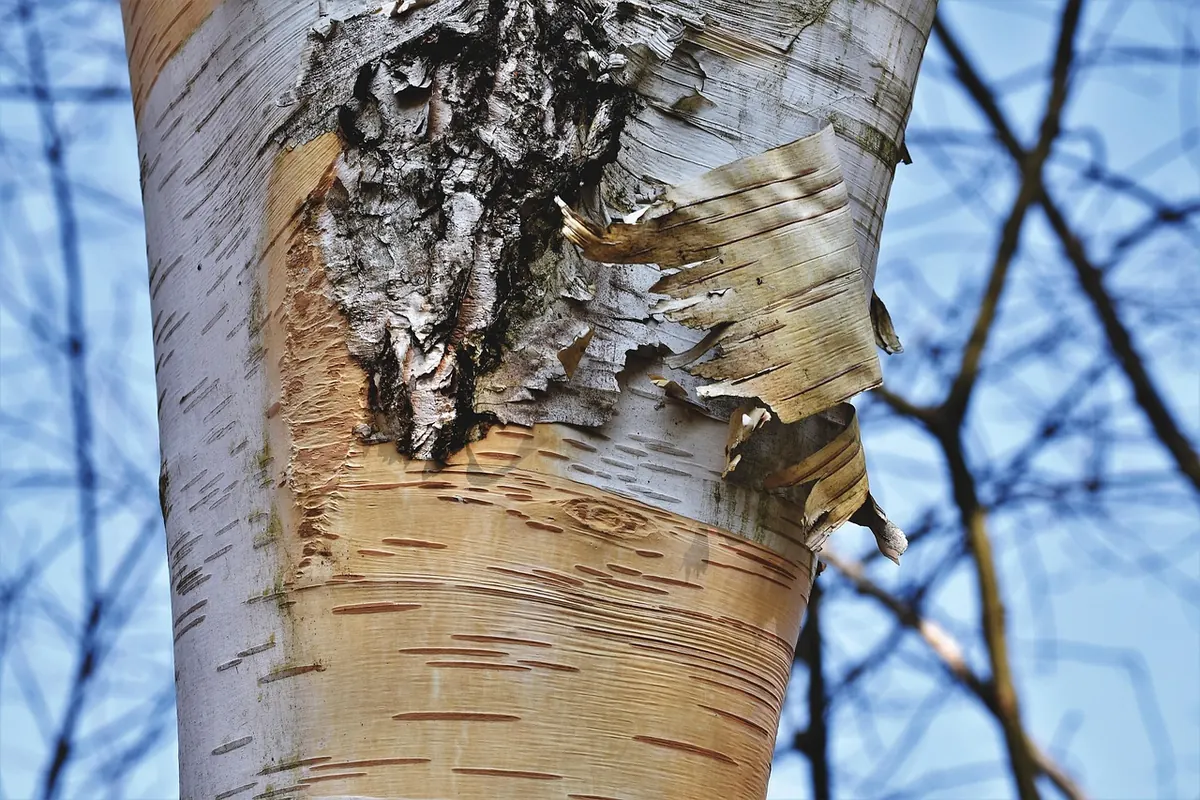
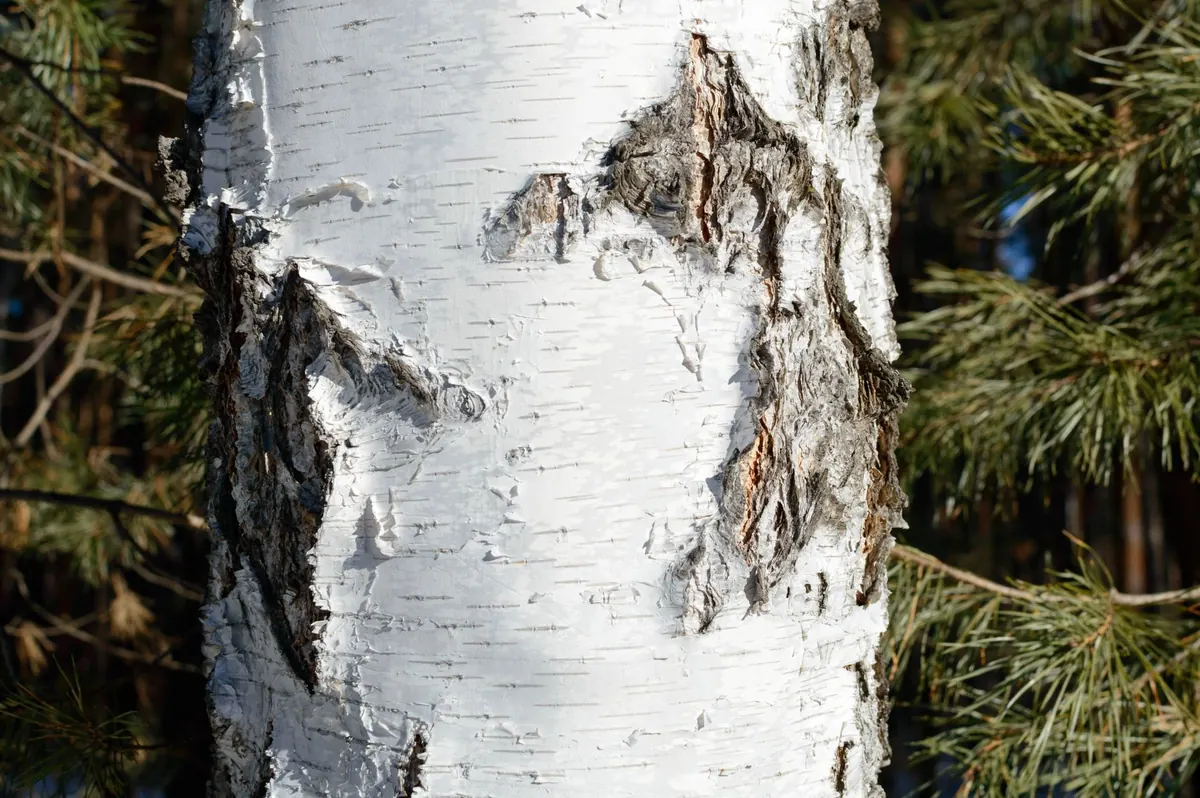
Birch bark is papery, and it peels sideways. That is the single most useful thing to understand. The tree adds a new layer each year, and the older outer layers split and curl away in horizontal strips rather than in vertical flakes. Look along the trunk for fine horizontal lines — the lenticels, which are breathing pores. On birch they appear as short dark dashes, dashes that widen into rough diamonds on older trees, and sometimes as thin peeling ribbons you can see from several metres away.
White trunks are not all the same
Silver birch (Betula pendula) has the classic chalk-white bark with a black, deeply fissured base that creeps higher up the trunk with age. Downy birch (Betula pubescens) is greyish-white, often with a pinkish or brownish wash, and the black base is far less pronounced. In North America, paper birch (Betula papyrifera) peels in generous creamy sheets with bold dark lenticels, while grey birch (Betula populifolia) looks chalky but barely peels at all and carries distinctive dark triangles where branches meet the trunk.
Some birches are not white
Don't let the popular image narrow your search. Yellow birch (Betula alleghaniensis) has bark that ranges from bronze to dull gold and shreds in fine, curly fringe-like strips. River birch (Betula nigra) looks salmon-pink to cinnamon-brown and peels in loose curls; it usually grows as a multi-stemmed tree along rivers and floodplains. If you are standing beside water looking at a peeling tree with pinkish bark, river birch should be your first guess.
Look at bark you can reach without touching the trunk — fallen strips at the base, dead lower branches, loose curls. Peeling bark off a living birch leaves a permanent wound and can invite rot.
Then examine the leaves
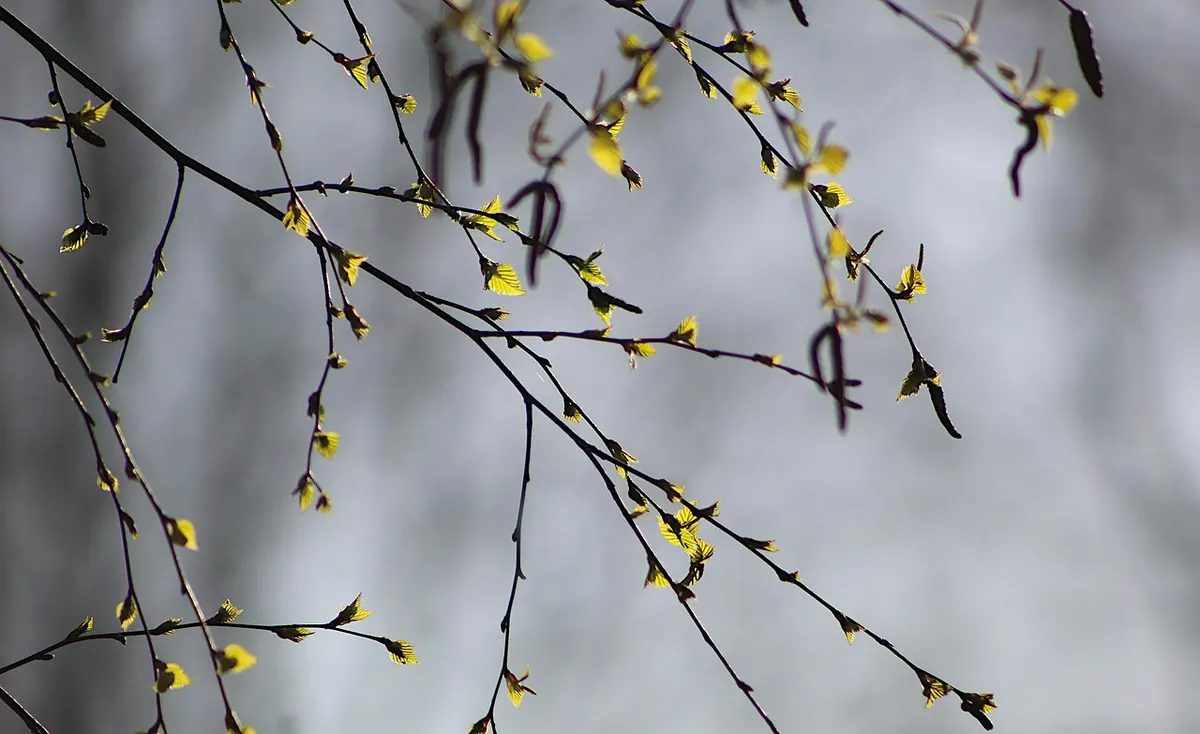
Birch leaves are simple, alternate along the twig, and toothed along the edge — usually doubly toothed, meaning each large tooth carries smaller teeth of its own. Hold one up to the light and the pattern becomes obvious. Then look at two details: the shape of the base and the texture of the stalk.
- Silver birch: roughly diamond-shaped or triangular, with a wedge-shaped base narrowing into a long, elegant point. The stalk is slender and smooth.
- Downy birch: rounder and more oval, with a rounded or slightly heart-shaped base and a shorter stalk that is softly hairy, as are the young twigs and the leaf veins beneath.
- Yellow birch: longer and more oval, with a pointed tip and a finely toothed edge; it often turns a clear gold in autumn.
- River birch: diamond-shaped and glossy, typically in pairs or soft clusters rather than singly.
Twigs confirm it. Silver birch twigs are hairless and dotted with tiny resinous warts, which you can feel with a fingertip. Downy birch twigs are covered in fine down. Crush a yellow birch twig and it smells faintly of wintergreen — a neat trick, once you know it, for a tree whose bark sometimes reads as cherry.
Use catkins to confirm what you suspect
Birch trees carry both male and female catkins on the same tree, and they look quite different from each other. The male catkins form in autumn and hang there all winter, stiff and closed, in clusters of two to four at the tips of twigs. In early spring they lengthen into the drooping yellow-brown "lambs' tails" that scatter pollen on the wind. The female catkins are shorter, thinner and held upright on the same branches, greenish and easily overlooked in the middle of the display.
After pollination the female catkins thicken, darken and begin to hang. By late summer and autumn they break apart to release hundreds of tiny winged seeds, which drift away on the wind and often collect in pale drifts along kerbs and garden edges. That late-season crumble is a good identification clue in itself: a tree shedding clouds of minute winged seeds, with cone-like fragments still clinging to the twigs, is almost certainly a birch.
Telling birches from their lookalikes
Most confusion happens with a handful of other trees. Run through this list when something feels slightly off:
- Aspen: pale grey-green bark with diamond-shaped lenticels, but it does not peel in papery strips. Its leaves sit on flattened stalks and tremble constantly in still air.
- White poplar: white bark and leaves with a felted white underside that flash silver in the wind. The leaves are lobed and maple-like rather than diamond-shaped.
- Alder: shares the dangling catkins, but its female catkins harden into small woody cones that stay on the tree all winter. Alder bark is grey-brown and cracked, never white and papery.
- Hornbeam: grey, fluted, sinewy bark and hop-like clusters of catkins. No peeling, no white.
- Cherry and plum: reddish-brown bark with prominent horizontal lenticels — the same lines, but the bark stays smooth and solid, and the leaves are untoothed in some species and stalked differently.
- Willow: some species have pale bark, but the leaves are long and narrow, and the catkins are fluffy rather than pendulous.
A five-minute routine in the field
- Step back and look at the whole tree: weeping tips, upright branches, single trunk or several stems from the base.
- Check the bark low down for peeling strips, lenticels and the black base; then check higher up, where the pattern is often clearer.
- Pick up a fallen leaf and hold it against the sky to see the double teeth and the shape of the base.
- Roll a twig between your fingers for warts or down, and crush one for smell.
- Find the catkins — hanging male, upright female — and note whether any woody cones persist.
- Confirm with at least two features before writing a name in your notebook.
Getting better at this
Identify the same tree across a year. A birch in February, bare and showing only bark and catkins, is a different puzzle from the same birch in July. Visit it in spring when the catkins open, in summer when the leaves are fully formed, and in autumn when the seeds scatter. That repetition teaches more than any photograph.
Keep a small notebook with a sketch rather than a description — a rough outline of the leaf base, the angle of the lenticels, where the catkins hang. Include the setting: wet ground, dry heath, riverside, pavement. Habitat narrows the list faster than most beginners expect, since downy birch tolerates wetter, poorer soils than silver birch, and river birch is seldom far from water.
And take your time at the trunk. Most misidentifications happen because someone looked at the bark, decided, and stopped there. Two more minutes with a leaf and a catkin will settle it.
Photo: Mikhail Peace / Pexels