Winter Birch Care: Protecting Young Trees from Frost, Deer, and Salt
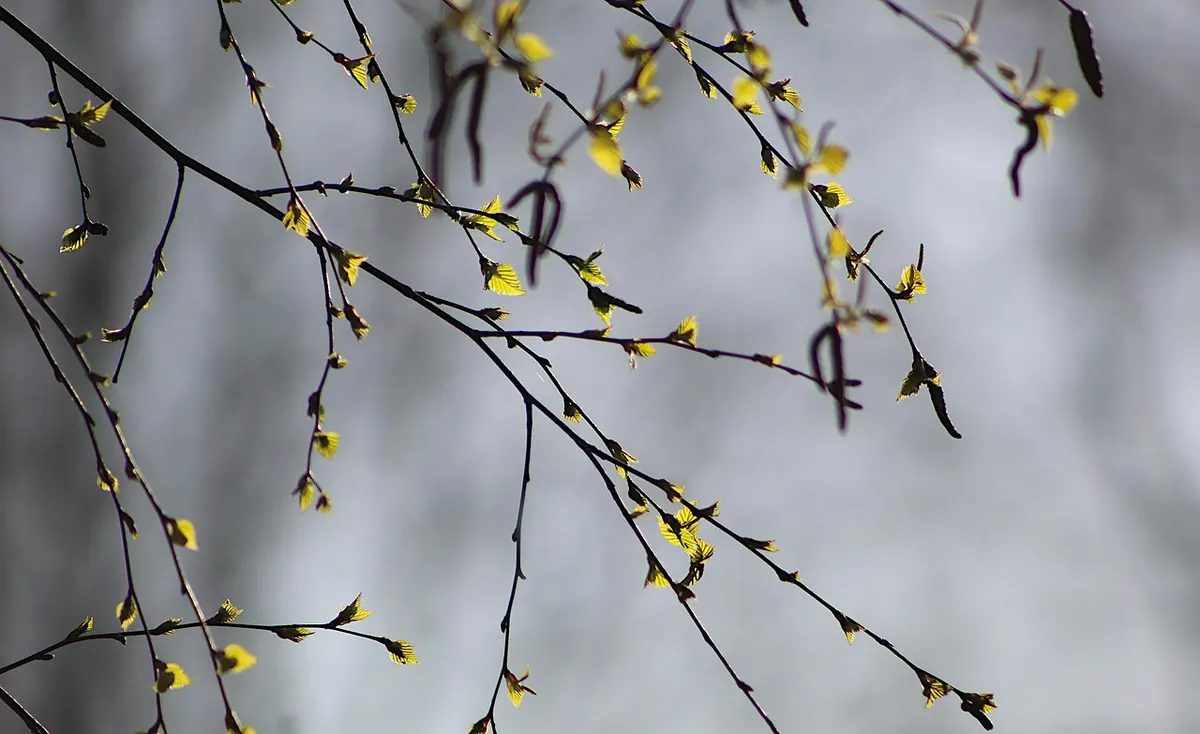
A birch that has settled in for a few years is a resilient tree. It grows on windy ridges and in thin soils across the north, and it shrugs off weather that would finish off more tender species. A young birch in a garden is another matter. Its bark is thin for the first several seasons, its roots spread wide and shallow, and its twigs sit at exactly the height a deer likes to browse. A driveway edge or an exposed lawn gives it none of the shelter it would find in a stand of trees.
The first three or four winters are the ones that decide how the tree turns out. The work involved is modest: a few hours in late autumn, a couple of supplies, and a reason to walk past the tree a few times between December and March.
Water and Mulch Before the Ground Freezes
A birch going into winter on dry soil has a harder time than one that went in damp. Roots keep respiring and moving water long after the leaves are gone, and a tree that starts the season with a full soil profile handles freeze-thaw cycles better. Give new trees a slow, deep soak once a week through autumn when rain is scarce, right up until the ground hardens. A hose trickling at the drip line for an hour does more than a quick sprinkle. Stop once the soil is frozen; water poured onto frozen ground runs off and can refreeze around the crown.
Then mulch. A ring of shredded bark, composted leaves, or wood chips two to four inches deep, spread out to the drip line and beyond, moderates the soil temperature and keeps frost from heaving young roots out of the ground. Keep the mulch a hand's width away from the trunk. Piling it against the bark holds moisture where you don't want it and gives voles a covered runway straight to the base of the tree.
Skip nitrogen fertilizer after midsummer. Late feeding pushes soft new growth that has no time to harden off before the first hard frost. If a soil test says the tree needs something, that is a spring job.
One more thing while you have the pruners out: birches bleed heavily in late winter and early spring, so leave structural pruning for late summer or the coldest stretch of midwinter. A branch broken by wind or snow can come off now, cleanly, at the collar.
Guard the Trunk Against Sunscald and Frost Cracks
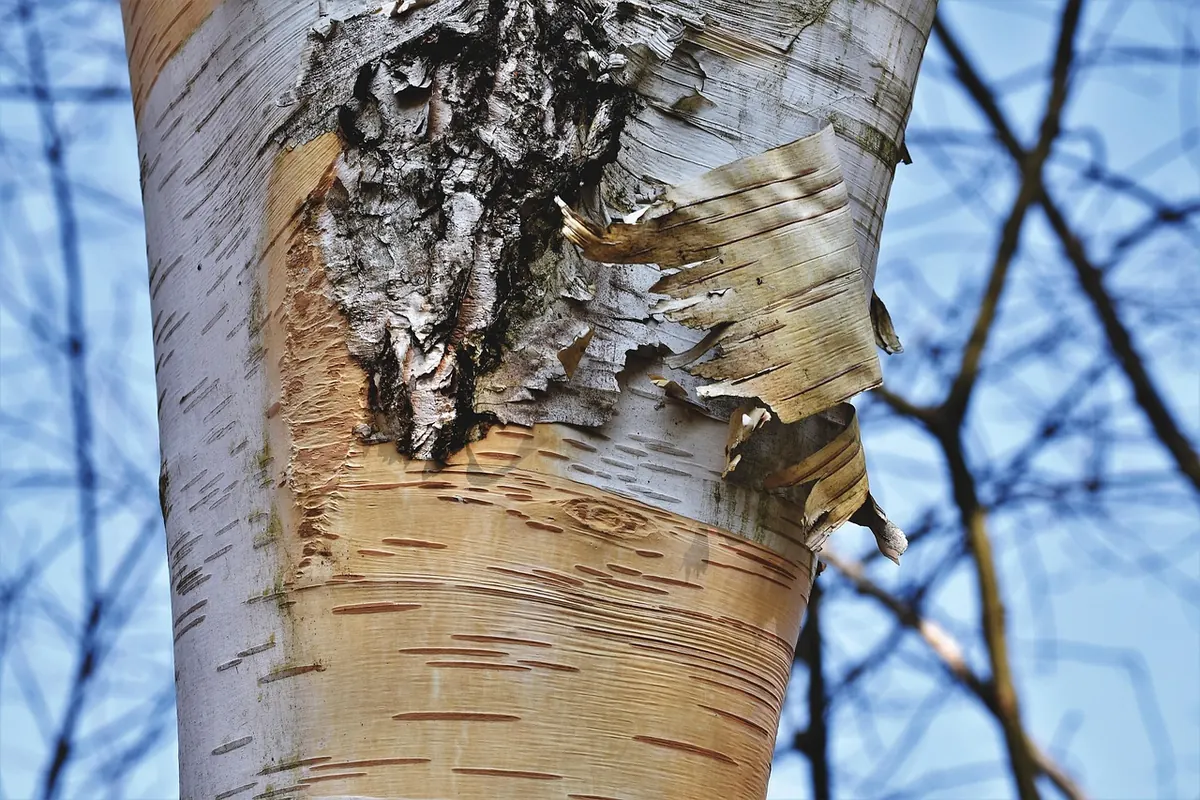
This is the damage most often mistaken for cold injury, and it usually happens on a bright, still January afternoon. Low sun warms the dark bark on the south or southwest side of the trunk, the tissue underneath breaks dormancy for an hour, and then the temperature drops at sunset and the cells burst. The result is a sunken patch of dead bark, or a long vertical split called a frost crack. Young birches, and any birch planted near a wall or fence that reflects light, are the usual victims.
Two approaches work:
- Tree wrap. A breathable white paper or fabric wrap, wound in overlapping spirals from the base upward and tied off at the top without strangling the trunk. Put it on after the leaves drop and take it off in spring once the frost is out of the ground.
- White latex paint. Interior latex diluted roughly half and half with water, brushed onto the lower trunk. It reflects the same light as a wrap, doesn't hold moisture, and many arborists prefer it for that reason.
What you want to avoid is anything that seals moisture against the bark: plastic sheeting, tight tape, or a wrap left on through the summer. A damp, dark band around a trunk is an invitation to canker and borers.
Stop Deer and Rabbits Before They Start
Deer cause two separate kinds of damage, and it helps to know which one you're dealing with. From late autumn into winter, bucks rub the velvet off their antlers on small trunks, shredding bark in vertical strips and sometimes girdling a tree outright. Through the hungry weeks of late winter, deer browse the tips and buds, which sets a young birch back a season. Rabbits and voles work lower down, gnawing bark at snow level where you won't see it until the thaw.
Physical protection is the only thing that works reliably, because deer pressure varies so much from one neighbourhood to the next:
- Trunk guards. Flexible plastic mesh or spiral guards from the ground to about four or five feet. Cheap, quick, and effective against rubbing. Check them in late winter for trapped moisture and loosen them as the trunk grows.
- Hardware cloth cages. A cylinder of quarter-inch mesh for rabbits, half-inch for deer, staked a few inches out from the trunk and buried an inch or two into the soil so nothing can dig underneath.
- Fencing. Where deer are constant, a six- to eight-foot woven wire fence around the planting bed is the only permanent answer. It looks like a lot of work until you compare it with replacing a tree.
- Repellents. Contact and odour sprays — putrescent egg, garlic, soap-based products — do help, but they need reapplying every few weeks and after rain, and they work best before deer have settled into a habit.
Keep the ground around the tree clear of fallen fruit, seed heads, and brush piles. All three draw animals in close.
Keep Road Salt Off the Root Zone
Salt reaches a birch two ways: as spray thrown up by passing traffic, which kills buds and tips on the road-facing side, and as runoff that accumulates in the soil, where it pulls water away from the roots and degrades soil structure over time. Birches are not among the more salt-tolerant trees, and a young one beside a driveway or a busy lane can lose a whole side to spray in a bad winter.
Start with what you control. Don't shovel plowed, salt-laden snow onto beds or over the root zone; pile it somewhere that drains away from the tree. On your own paths and steps, use sand or grit for traction and reserve de-icing products for the spots that genuinely need them, sweeping up any overspill. Products based on calcium magnesium acetate are generally described as less damaging to plants than rock salt, but less damaging isn't the same as harmless, so use them sparingly.
Where spray is unavoidable, a burlap screen on stakes along the road side, open at the top, blocks a good deal of it. Put it up before the first forecast snow and take it down in spring. Then, once the ground has thawed, flush the root zone with a few long, slow soaks to push accumulated salts down past the roots.
Staking, Wind, and Snow Load
Stakes are a temporary scaffold, not a permanent crutch. If the tree was staked at planting, check the ties in autumn: wide webbing or hose-and-wire, never bare wire, and loose enough that the trunk can sway a little. That movement is what builds trunk taper and stronger roots. Plan to remove the stakes after the first season or two.
After a wet, heavy snow, brush the load off from the top down with a soft broom or by hand. Do it gently, and don't try to knock ice off — you'll take the buds with it. A branch that is bent and frozen solid should be left alone; young birch wood is flexible, but frozen wood snaps. If a tree is leaning after a storm, adjust the stake rather than hauling on the trunk.
A Short Winter Walkthrough
Once a month, walk out with a torch and take ten minutes:
- Look at the trunk from the base up: fresh chew marks, bark stripped in strips, or a new vertical crack.
- Check every tie and guard — loosen anything biting into the bark, straighten anything that has slipped.
- Brush off snow after heavy falls, before it turns to ice.
- Look for salty puddles or refrozen runoff sitting over the root zone.
- Note anything broken or suspicious on your phone so you remember it in spring.
That's the whole routine. By the time the birch is four or five years old, the bark will have thickened, the roots will have spread, and most of this becomes unnecessary. Until then, a wrap, a guard, and a few minutes a month will carry it through.
Photo: gosiak1980 / Pixabay